August 31, 2026

The energy industry is buying AI, but not scaling it. Here is why.
ONS-2016-1

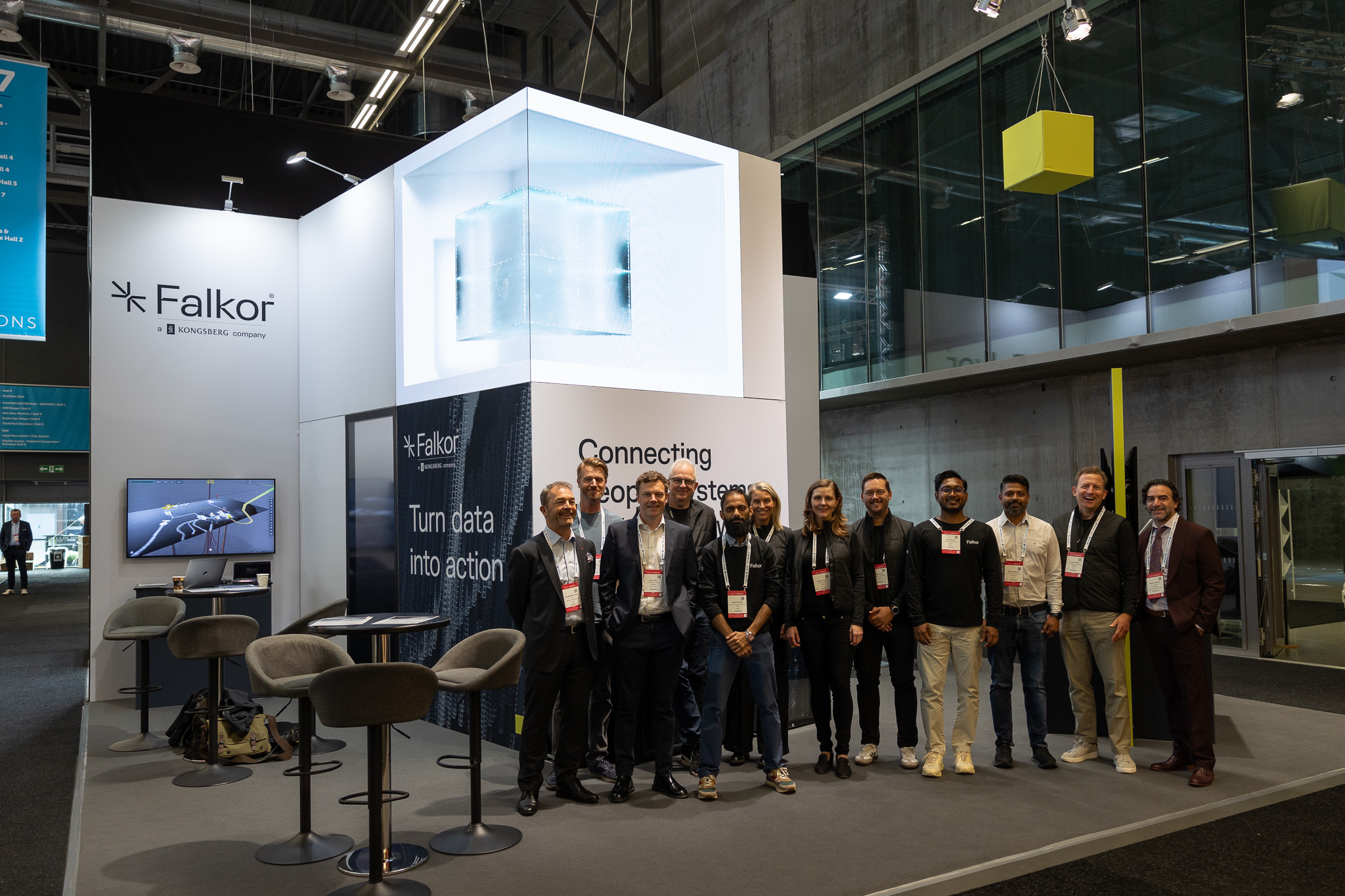
Falkor's booth at ONS 2026.

Across Falkor's sessions and customer discussions at ONS, one message surfaced again and again: technology is not the hard part.

So what is? In our experience, it’s creating the foundations that allow people, data, and expertise to work together at scale. Whether the discussion was about industrial AI, collaboration between operators and suppliers, or the future of subsea developments, the organizations making the most progress are focusing on the systems that allow those technologies to deliver real value.

Building the foundation vs. plugging in an AI model

One of the strongest discussions of the week came during Falkor CEO Shane McArdle's session with Fernanda Lopez Larsen, EVP Corporate Development at Yara International.

Their conversation focused on a familiar problem for industrial companies: bringing information together in a way that people can actually use. Decades of engineering drawings, maintenance procedures, operating history, and frontline expertise already exist – the question is how to make that knowledge accessible and useful in day-to-day work.

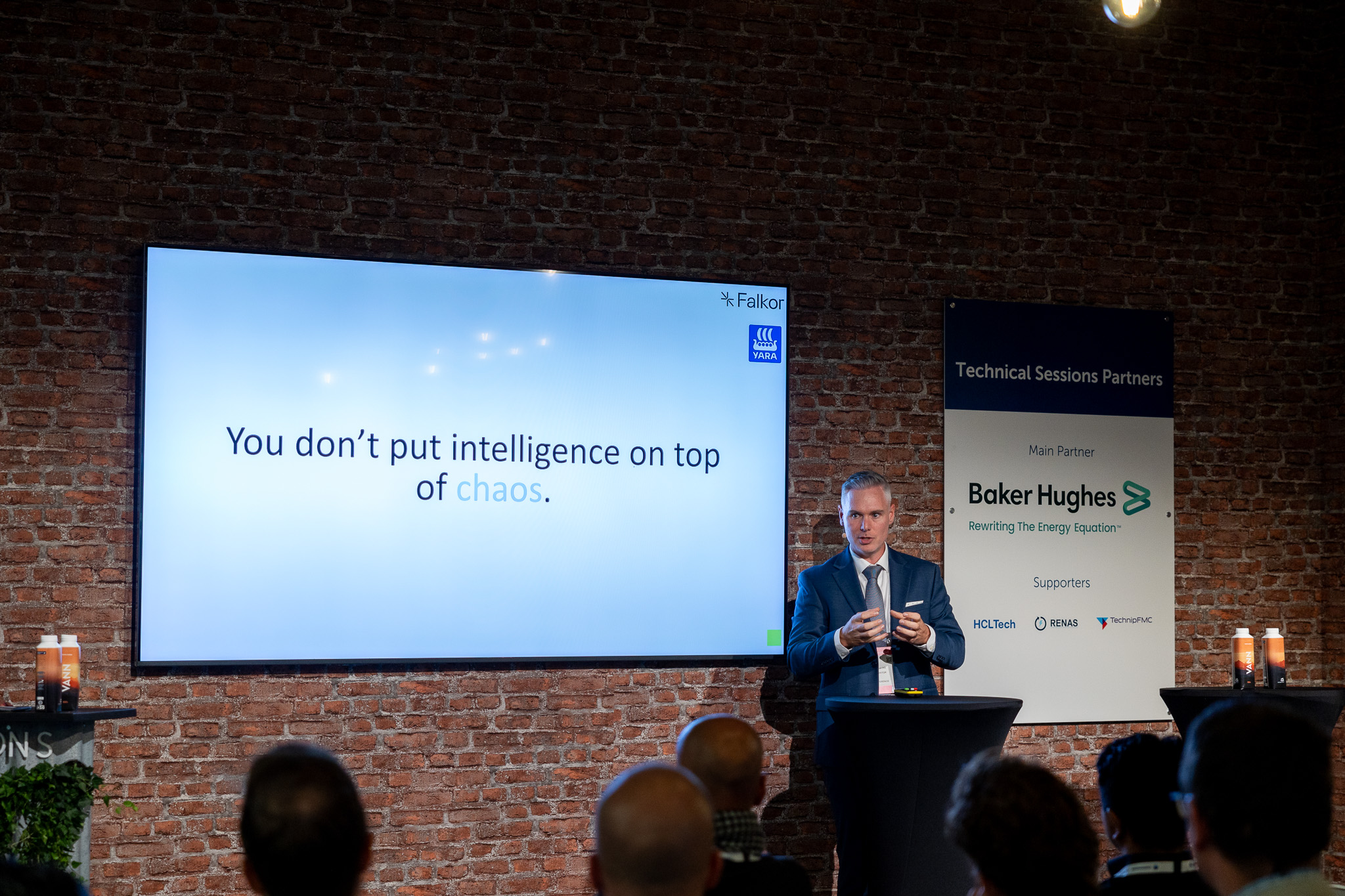
As Shane put it: "You don't put intelligence on top of chaos."

Technical-session-Monday-ONS-2026-7

CEO of Falkor, Shane McArdle at ONS 2026, at the session with Fernanda Lopez Larsen, EVP Corporate Development at Yara International.
The phrase resonated throughout the week because it captures a reality that many organizations are discovering as they move from AI experimentation to large-scale deployment. Success depends on getting the fundamentals right long before the first model goes into production.

Yara's experience reinforced that point. While technology played a critical role, many of the most important lessons came from involving operators, understanding how people actually work, and ensuring that digital solutions fit naturally into existing processes. As Fernanda noted, the goal is not to "move fast and break things." In industrial environments, the challenge is to move fast and build things.

ONS-Wednesday-16

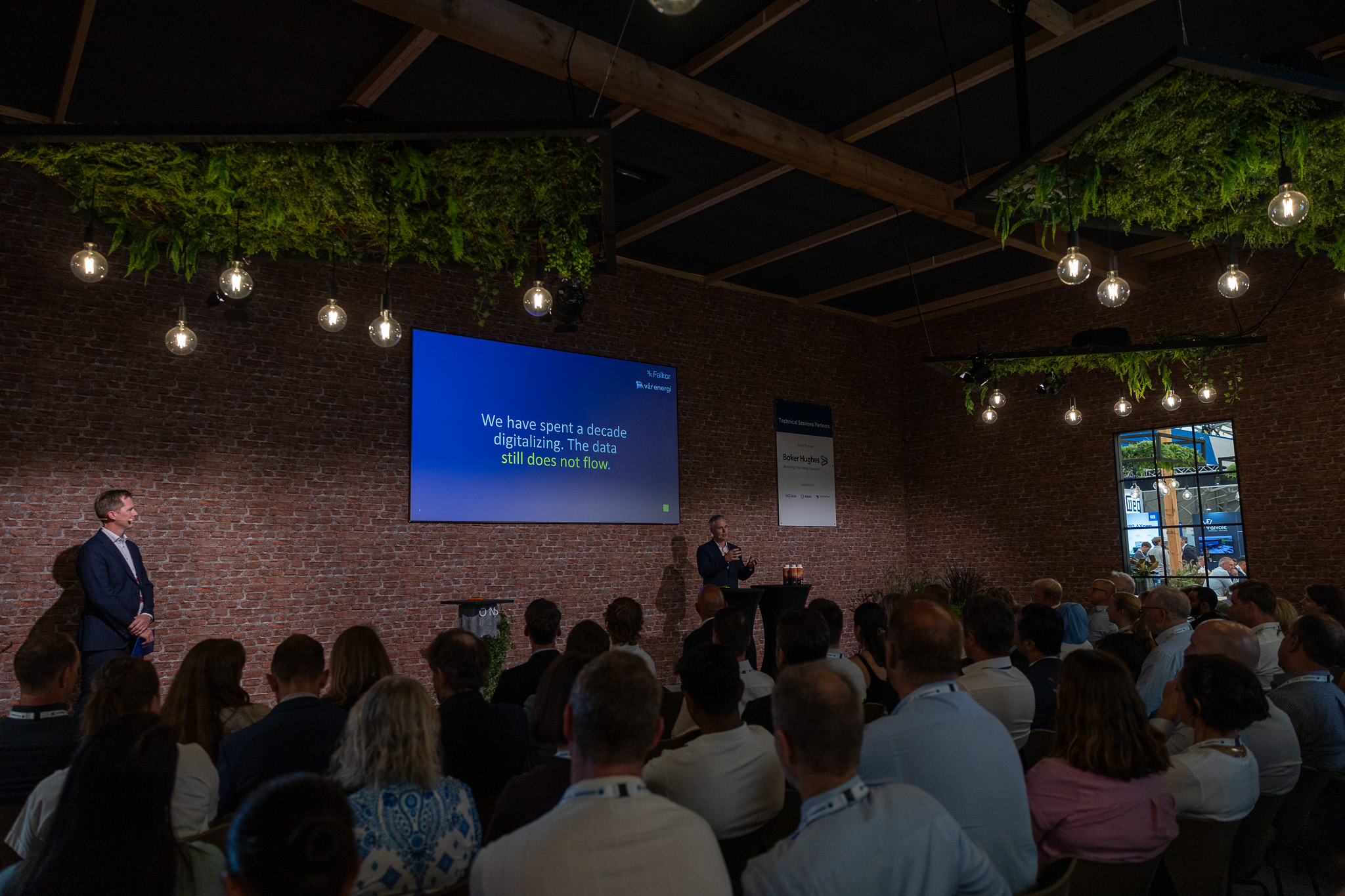
Oddgeir Dalane, SVP Project Development, Vår Energi and CEO of Falkor, Shane McArdle.
The importance of strong foundations was a recurring theme in Falkor's session with Vår Energi, From Data Silos to Shared Value.

The discussion explored a familiar industry challenge. Inside teams, collaboration often works well – it is at the point of handover that problems arise between operators and suppliers, projects and operations, or different engineering disciplines.

According to Oddgeir Dalane, SVP Project Development and Shane, those barriers are rooted in fragmented data, inconsistent context, and organizational habits that develop over time.

The session highlighted how contextualized information and digital twins can help bridge those gaps, allowing engineers to spend less time locating information and more time applying expertise and judgment. By focusing on a single asset and aligning operations, maintenance, and IT around a common scope, Vår Energi was able to go live with a digital twin in six months. The approach also enabled the team to screen up to 1,000 inspection findings in three hours, compared to 3-4 findings manually per day.

The message was practical rather than theoretical: start with a focused use case, create value early, and improve the data along the way.

As Oddgeir concluded, organizations should "act when you can, not when you have to."

ONS-Wednesday-57

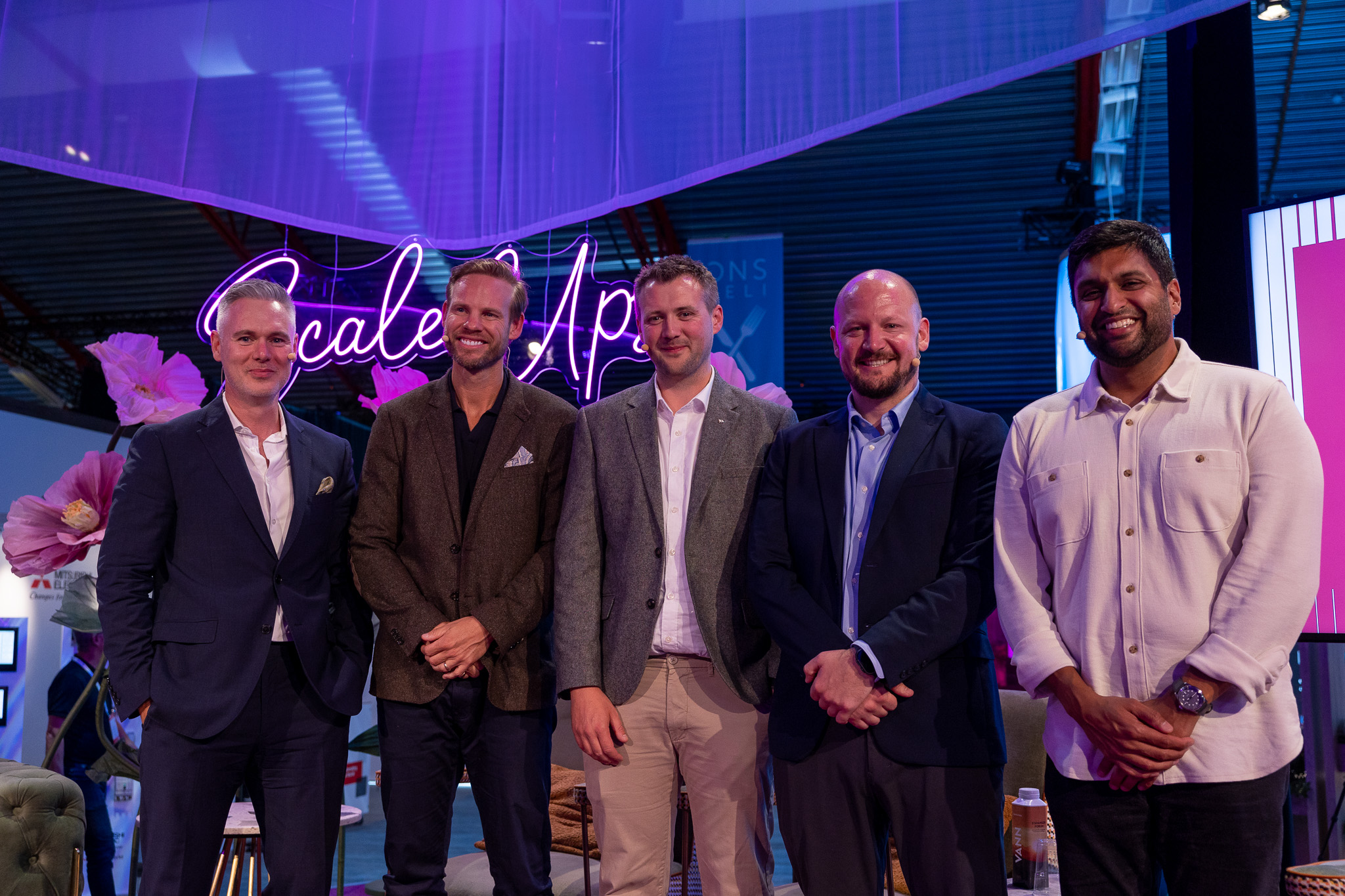
CEO of Falkor Shane McArdle, Christopher Hoftun (Spudding Co.), Marty Cochrane (CEATAEC), moderator Sven Sunde (Amazon Web Services (AWS) and Viral Shah (Riff).

As AI scales, trust matters most

Another recurring topic throughout ONS was agentic AI and what it will take to move from pilots to production.

During a panel discussion on scaling AI, Shane emphasized that trust remains the defining requirement in high-consequence industries. Generative AI may be evolving rapidly, but industrial organizations still need governance and domain expertise around those capabilities.

One observation stood out: the difference between technological progress and organizational readiness. AI capabilities are advancing on an external timeline set by model providers, but an organization's ability to absorb those capabilities moves at a different pace.

That gap may become one of the biggest bottlenecks to adoption over the coming years.

Ledaflow-ONS-Tuesday-7 (1)

Jan Gerhard Norstrøm, Managing Director, LedaFlow Technologies DA, and Jørn KjølaasJørn Kjølaas (co-presenter), Senior Research Scientist at LedaFlow Technologies DA.
Simulate before you build

While much of ONS focused on digital transformation, simulation remained a powerful reminder of how industrial innovation happens in practice.

In the Bold Moves in Subsea Innovation session, researchers explored what it would take to enable significantly longer subsea oil tiebacks. The HyWax joint industry project is investigating how hydrants and wax can be transported safely through pipelines, potentially opening new development opportunities through advanced modelling and experimentation.

The lesson extends far beyond flow assurance: better models enable better decisions. By understanding risk before committing capital, operators can evaluate alternatives that might otherwise appear too costly or uncertain.

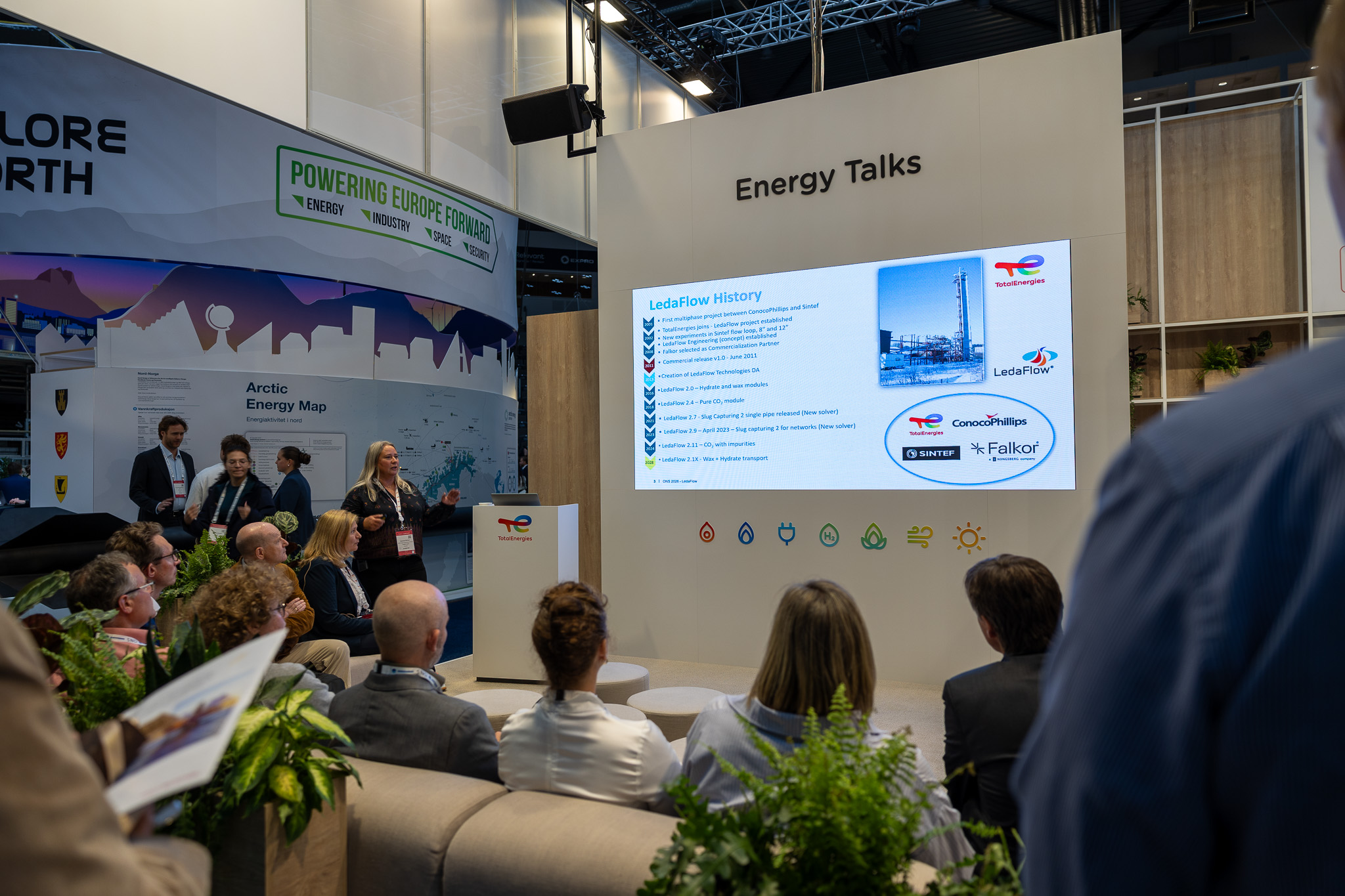
That same principle was evident in discussions around carbon capture and storage. At the TotalEnergies stand, speakers demonstrated how LedaFlow is being applied to CO2 transport and injection, helping operators understand and manage increasingly complex CCS value chains.

As Jan Gerhard Norstrøm summarized: simulate before you build. It's a lot cheaper.

If you want to read more about this project, you can find an article on TU. 

ONS-Wednesday-12

Vanessa Richon, R&D Subsea Technology manager at TotalEnergies and Biljana Djoric, CO2 Transportation Manager in TotalEnergies Norway.

Looking back and looking ahead

The discussions were about AI, digital twins, simulation, and CCS, but even more so, they revolved around what makes these technologies successful.

The organizations creating the most value are doing the foundational work first. They are making knowledge easier to access, connecting workflows across teams, and creating the conditions for technology to be adopted at scale.

As our CEO Shane McArdle often says, do the unglamorous work first. It is rarely the most exciting part of digital transformation, but throughout ONS it was often the difference between a promising pilot and a meaningful business result.

The future is not fixed. Let's continue shaping the future of work.

Interested in continuing the conversation from ONS? We'd love to discuss the challenges, opportunities, and ideas that emerged throughout the week.

Author
  • Falkor

    Falkor

    Falkor (formerly Kongsberg Digital) is a provider of next-generation software and digital solutions to customers within oil and gas, chemicals and offshore wind. Its Industrial Work Surface, powered by the Kognitwin® platform, is redefining how industries work with data, insight and decision-making.

Stay in the know. Sign up to our latest news and updates.