Use cases
June 26, 2026
GM Hub cutting the cost of inconsistent data
Industry: Oil & gas
Asset type: Wells
Solution: Operations & performance
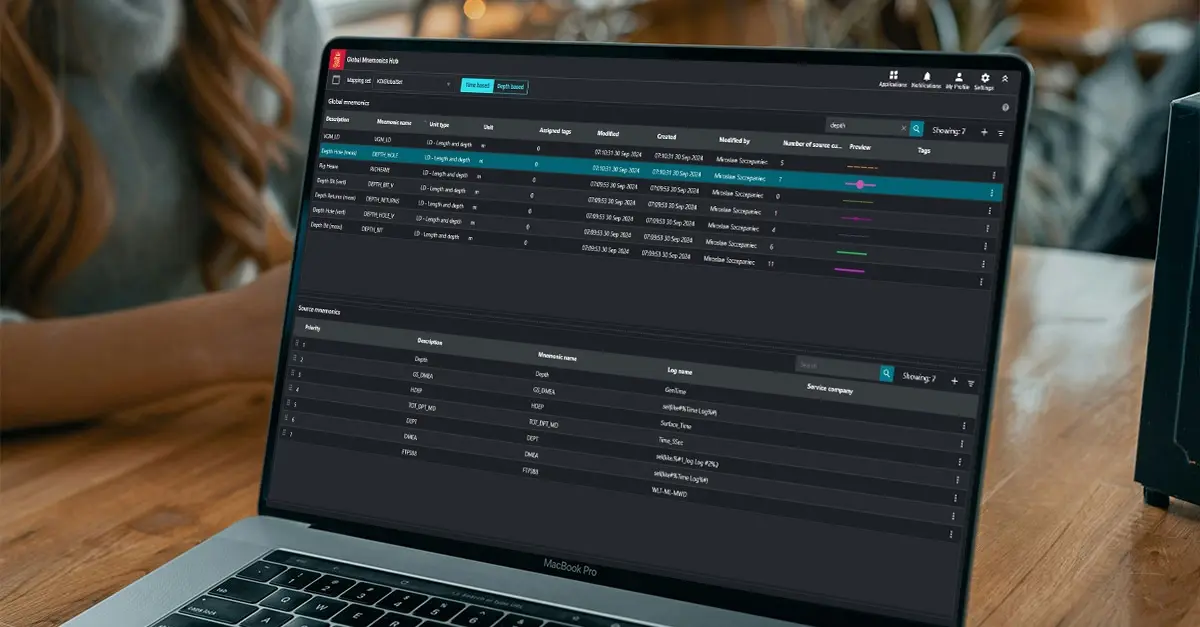
Image: SiteCom's Global Mnemonics Hub (GM Hub) dashboard.
Background
When well data comes from different rigs, vendors, and systems, inconsistencies are almost inevitable. Channel (mnemonic) names vary, units don’t align, frequencies drift and log indexes shift.
This is the root cause of delayed decisions, failed analytics initiatives, and "stuck" AI projects - and it is the exact problem the Global Mnemonics Hub (GM Hub) solves.
Why can’t I compare data across wells, rigs, and vendors right away?
Every sensor on a rig, service unit or platform produces labelled data - with a mnemonic, a channel name, a unit of measure, an index type. The problem is that there is no universal standard for how those labels are assigned.
Different LWD vendors use different mnemonics for similar measurements. Different mudlogging companies have different naming conventions. The same rig may have had three contractor changes in five years, each leaving behind a slightly different data schema. Data structures are rarely static; WITSML objects not only vary across wellbores within the same campaign, but they also evolve as operations progress through the well lifecycle.
The result is an immediate reconciliation challenge for anyone working across sources. Is hookload a HKLD, HKL, HOOKLOAD, or HOOK_LOAD? Are the units in kN or klbf? Did the gamma ray mnemonic change between sections when the tool changed? And how should channels in the same log be aligned when their sampling frequencies differ?
Without a solution, every data consumer builds its own “data fixing” pipeline from scratch, and when a new vendor changes a mnemonic, the pipeline most likely breaks.
What the GM Hub does
The Global Mnemonics Hub is a standardisation and transformation layer that sits between raw data sources and data consumers. Regardless of where data comes from, which vendor, which rig, which version of WITSML - it arrives at its destination in a consistent, correct, and ready-to-use format.
 A multi-layer standardisation approach SiteCom’s Global Mnemonics Hub
GM Hub starts by standardising names and meaning. At its core is a Global Mnemonics mapping engine that translates incoming curves into a common naming convention. It aligns units automatically, so downstream users receive data in the format they expect without performing their own conversions.
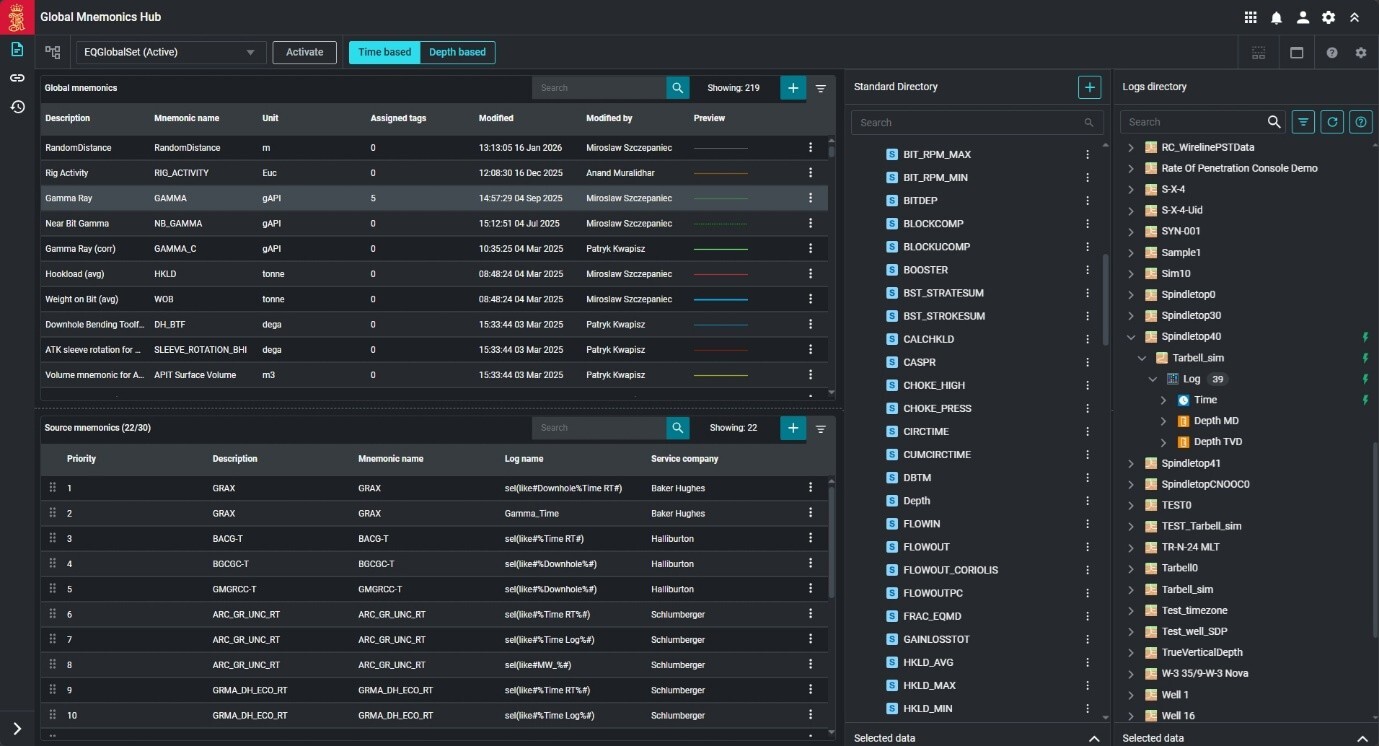
Mapping profiles can be updated centrally in SiteCom Portal and applied instantly where needed. GM Hub includes a predefined mnemonic set to help administrators tailor the system quickly.
GM Hub delivers fit-for-purpose sampling without losing the original data. It creates outputs at the frequency each application needs, up to 20 Hz, without altering the source. For example, a torque-drag model may need five-second samples, while a machine learning pipeline may need one-second data. Both are served without compromise.
It also handles common quality issues that break calculations, including gaps, overlaps, index shifts, and splice corrections, while maintaining an audit trail. Standardisation profiles can be defined and updated centrally, then applied instantly across every wellbore or selectively by channel set, interval, and time range. Each partner receives exactly what they need.
Standardise, share, and visualize your well data
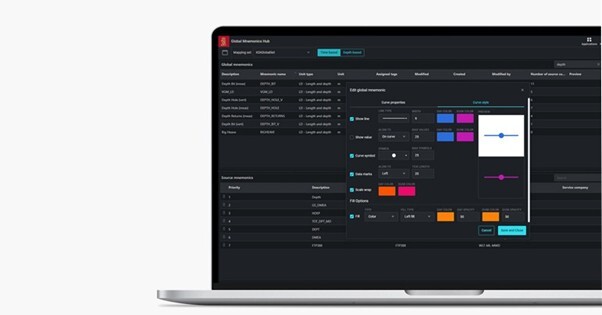
Standardised curve styles and default settings make SiteCom easy to use..
Why AI And ML projects fail without this
The connection between data standardisation and AI/ML success is direct. Models learn from patterns in historical data. If that data is inconsistent - different mnemonics, units, sampling rates, index alignments - the model struggles.
In practice most AI and ML projects in drilling operations spend their time and budget on data preparation rather than model development. Engineers manually reconcile datasets, write one-off transformation scripts, and build pipelines that break whenever the upstream data environment changes.
GM Hub eliminates this preparation burden. When data arrives at an analytics platform through GM Hub, it is already standardised and pre-processed. The model development team can focus on the model.
For operators investing seriously in AI-assisted drilling optimisation, pore pressure prediction, or real-time performance benchmarking, it is the difference between projects that reach production and projects that stall in the pilot phase.
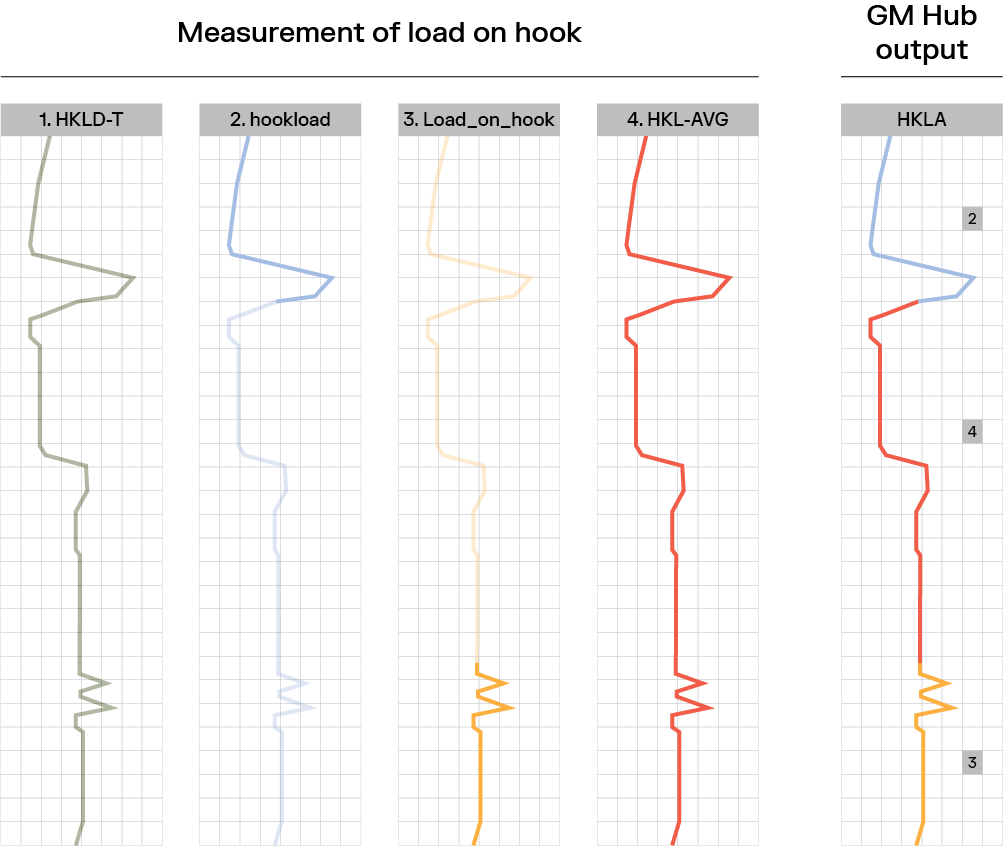
GM Hub splices curves in real time based on priority.
Stop fixing data, start using it
The quantified value proposition is a reduction of up to 50% in data management overhead by moving from manual, well-by-well reconciliation to a governed, automated, centrally managed pipeline.
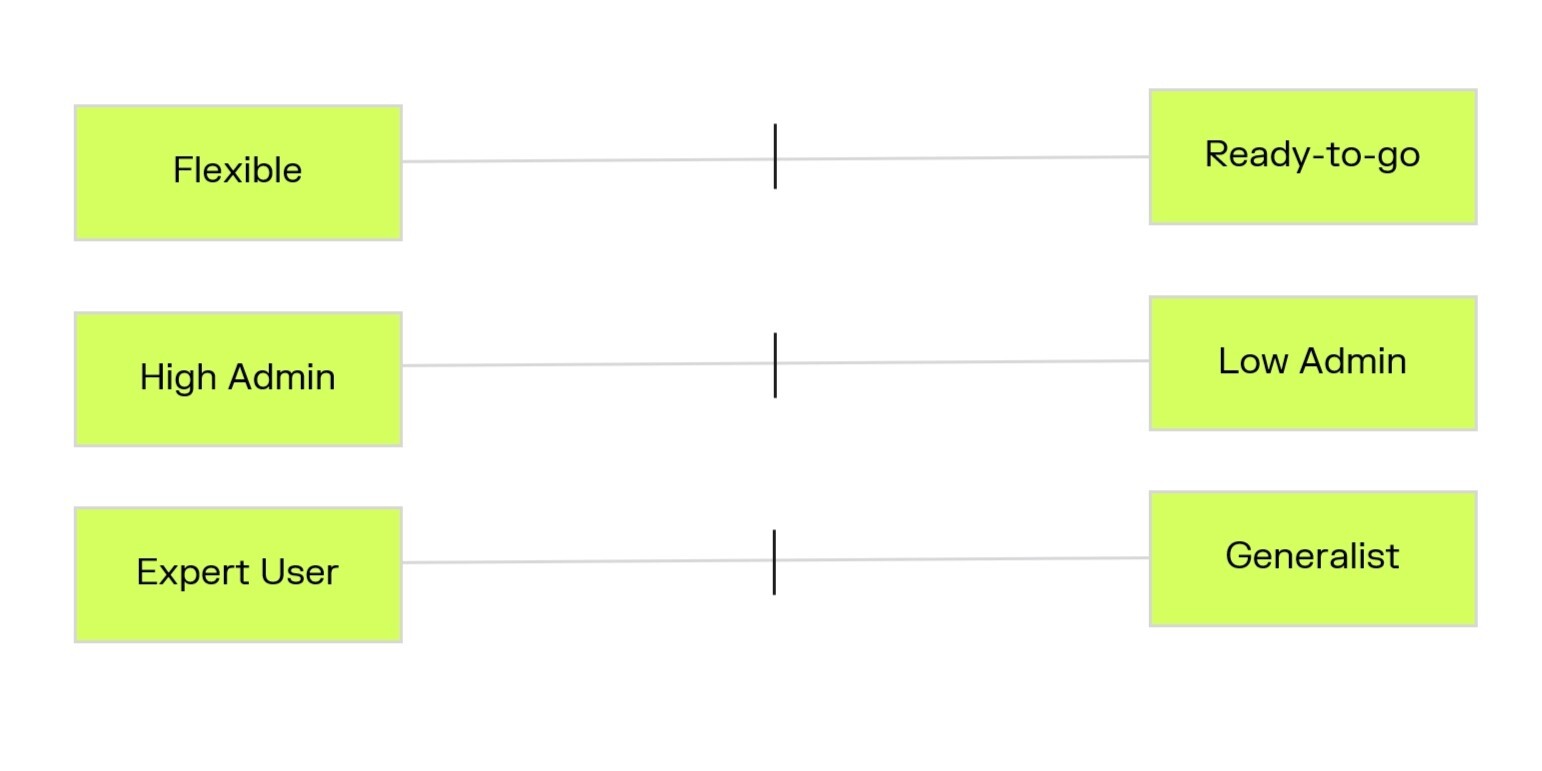
GM Hub adapts to your needs.
But the more important number may be harder to quantify: how many decisions were delayed because data wasn’t available in the right format? How many analytics initiatives were abandoned because data preparation proved too expensive? How many third-party tools were never properly integrated because the data exchange was too fragile?
GM Hub is the answer to all of those questions. It makes data usable, instantly, consistently, securely, and at scale.
Almost every capability in the SiteCom platform: real-time visualization, KPI calculation, agentic algorithms, AI Intelligence and data shared via SiteCom Connectors depends on clean, consistent and correctly formatted data. Without GM Hub, each capability solves its own compatibility problem individually. With it, the problem is solved once, at the source, for everyone.
The energy industry is moving toward remote real-time, AI-driven well operations. That path runs directly through a governed, standardised data layer.
Related use cases
September 23, 2026
Correlation in SiteCom Live: placing formation markers with confidence, in real time
June 19, 2026
SiteCom: Real-time gas shift analysis for understanding pressure behaviour in HPHT wells

June 12, 2026
SiteCom: Why real-time data quality monitoring is now a safety-critical function
June 3, 2026
SiteCom Link: Closing the gap between disconnected systems and real-time well operations